






Stack migration and modernisation

Accelerate stack migration and modernisation with a Gemini Migration Agent

In the blueprint set out here, one Gemini agent built with Agent Development Kit (ADK) orchestrates the migration on Google Cloud through Assess, Plan, Deploy and Optimise. Deterministic services move and check the data, Jev gates routine decisions and people approve the plan.

Blueprint

Gemini Migration Agent Built with ADK. Orchestrates every phase.

  1. AssessJev gate
  2. PlanJev gate
  3. Person approves
  4. DeployJev gate
  5. OptimiseJev gate
From
SAP, Oracle, Amazon S3, Azure Blob, Microsoft 365, virtual machines and Spark jobs
To
Cloud Storage, BigQuery, AlloyDB, Compute Engine and Cloud Run, chosen per workload
The problem

The models are ready. The estate is not.

Many systems, no single map

Each system has its own interface, credentials and quirks. How they connect lives in people's heads and in one-off scripts. Give an agent too little and it acts blind. Give it everything and it slows down, costs more and makes confident mistakes.

Why now

Bigger context windows do not fix this.1 Models still miss what sits in the middle of a long prompt,2 and every tool definition takes space before the agent has done any work.3 Effective context therefore has to be selected, not simply accumulated.4

MCP provides a standard protocol for connecting agents to tools and resources.5 Stripe shows where this can go: its coding agents merge over a thousand pull requests a week,6 drawing on one central MCP server reported to hold over 400 tools.7 Enterprise migration is the next application of that pattern.

  1. Google, Gemini long context.
  2. Lost in the Middle.
  3. Anthropic, code execution with MCP.
  4. Anthropic, effective context engineering.
  5. Model Context Protocol server specification.
  6. Stripe, Minions.
  7. VirtusLab report on Stripe's toolshed secondary source.
Google Cloud reference architecture

One agent orchestrates every phase.

The Gemini Migration Agent coordinates the work, reasons over evidence, proposes plans and calls governed tools. It does not copy bytes, parse exact formats, count rows or bypass approvals: deterministic services, code and SQL do that. The phases follow Google's migration framework and its migration documentation. The demonstrations below show its gate pattern today, with deterministic rules making each decision. The agent and the Google Cloud services in this section are a blueprint and are not part of this public demo.

Spans all four phases. Sends governed tool calls down, gets evidence and status back.

Blueprint
  1. 01 Assess

    Inputs
    Inventory, owners, dependencies, constraints, cost and use.
    Agent action
    Summarises the evidence and the gaps. MCP tools inspect authorised sources; Migration Center discovers infrastructure.
    Jev gate
    Routes findings. Unclear ownership or sensitivity goes to a person.
    Output
    Assessed inventory, dependency map, baseline and gap list.
    State
    Blueprint
    Spanner Graph holds dependencies and lineage
  2. 02 Plan

    Inputs
    Assessed inventory, dependency graph, baseline and constraints.
    Agent action
    Proposes the target, sequence, access, cutover, rollback and acceptance tests.
    Jev gate
    Stops low-confidence recommendations becoming actions.
    Output
    A source-to-destination plan with run order, rollback and tests.
    State
    Blueprint
  3. Person approves the plan Nothing deploys without it.
  4. 03 Deploy

    Inputs
    Approved plan, runbook, rollback and validation criteria.
    Agent action
    Coordinates jobs, status and evidence. It does not move bytes.
    Execution
    Migration services move the data. Code and SQL count rows and validate schemas.
    Jev gate
    Gates routine steps. Escalates policy failures and evidence gaps.
    Output
    Validate before cutover. Roll back if validation fails.
    State
    Blueprint
  5. 04 Optimise

    Inputs
    Baseline, migration evidence, cost and performance telemetry.
    Agent action
    Interprets the evidence and proposes the next improvement.
    Jev gate
    Routes anomalies. Escalates uncertain recommendations.
    Output
    An outcome comparison and the next backlog.
    State
    Blueprint
    Looker reports quality, cost and performance
  • MCP Tool Shed Governed tools and resources. A protocol boundary, not a parser.
  • Jev gate Bounded System 1 decisions in every phase.
  • People Approve the plan and decide what the gate cannot.
  • Lineage evidence What depends on what, before anything changes.

What moves, from where, to where

Destination is chosen by workload. Not all data belongs in BigQuery. Each lane is a representative reference path, not an automatic recommendation. In every lane, deterministic checks produce the evidence and Gemini interprets it.

  1. Unstructured documents Representative blueprint path

    Source
    Microsoft 365, Amazon S3 and Azure Blob Storage.
    What moves
    PDFs, Office files and images.
    Movement or service
    Storage Transfer Service where its documented sources fit, such as Amazon S3 and Azure Blob Storage. Microsoft 365 needs its own export path.
    Destination
    Landing Cloud Storage Retrieval Google Cloud RAG Engine Analytics BigQuery, optional
    Validation or evidence
    Code checks object counts, checksums and metadata.
  2. Spreadsheets and tabular files Representative blueprint path

    Source
    Excel and CSV files in Microsoft 365, Amazon S3 and Azure Blob Storage.
    What moves
    Sheets, tables, schemas and metadata.
    Movement or service
    A documented transfer into a Cloud Storage landing zone, then deterministic loaders and SQL.
    Destination
    Landing Cloud Storage Analytics BigQuery
    Validation or evidence
    SQL counts rows, validates schemas and reconciles totals. RAG is not the row counter.
  3. Operational relational data Representative blueprint path

    Source
    PostgreSQL, Oracle, SQL Server and SAP-backed data.
    What moves
    Tables, change streams, schema and state.
    Movement or service
    Database Migration Service or Datastream, only where documented for the exact source and target. SAP needs a path chosen for the specific system.
    Destination
    Operational AlloyDB for PostgreSQL Analytics BigQuery
    Validation or evidence
    Schema, row, change-lag and integrity checks.

    AlloyDB AI can call TypeSafe's hosted Jev API through AI functions and Model Endpoint Management in the blueprint. Jev is not stored or hosted in AlloyDB.

  4. Applications and jobs Representative blueprint path

    Source
    Virtual machines, Spark and Hadoop jobs, containerisable apps.
    What moves
    Workloads, binaries and configuration. Not data.
    Movement or service
    Migrate to Virtual Machines and Migrate to Containers for their documented paths; workload-specific tooling for Spark and Hadoop.
    Destination
    Machines Compute Engine Jobs Dataproc or GKE Stateless Cloud Run
    Validation or evidence
    Health, behaviour, performance and rollback checks.

MCP exposes tools and resources. Deterministic code or SQL parses exact formats, counts rows and validates schemas. The current demo does not run MCP servers.

The approach

Five capabilities the agent uses.

The Gemini Migration Agent starts from the stack you already run. It reaches systems through the MCP Tool Shed, lets Jev filter routine decisions so Gemini can reason about the hard ones, and measures every outcome. These roles make up the blueprint.

Select a capability to open it.

Terms

MCP
Model Context Protocol. The open standard for connecting agents to tools and live systems (MCP specification).
MCP server
Exposes one system, such as a CMDB or data warehouse, to agents.
MCP Tool Shed
The governed set of MCP servers; each agent gets only what its task needs.
Skill
A playbook an agent loads for one task, such as migrating a table.
Hook
A check before or after a tool call that can block it.
System 1 model
A small, fast model that returns a typed decision with a confidence, not free text (TypeSafe). Jev is an example.
Context fabric
The shared graph that agents query for lineage and meaning: Spanner Graph in the blueprint, a small sample graph in the demos.
Modernisation Springboard
The BigQuery destination: migrated data, telemetry, audit logs and eval records.
Lineage graph
A graph of what feeds what: tables, jobs, files and reports.
Eval record
A log of one agent step: decision, confidence, tools, tokens, latency, outcome.
Guided example

Watch the gate decide.

Pick a request. The graph lights up what it touches, and the gate decides whether it may proceed. It runs in your browser on a 15-fact sample estate. No model is called.

Choose a migration request

Choose a request to see its lineage path.

Orchestrator view Blueprint

Phase
Plan
Source
SAP column KNA1.REGION
Target
BigQuery customers.region
Tools
Lineage lookup through the MCP Tool Shed
Jev gate
Proceed
Person
Finance is told. The plan still needs approval

Here, deterministic rules in your browser make each decision, so any outcome can be replayed. No model or Google Cloud service is called.

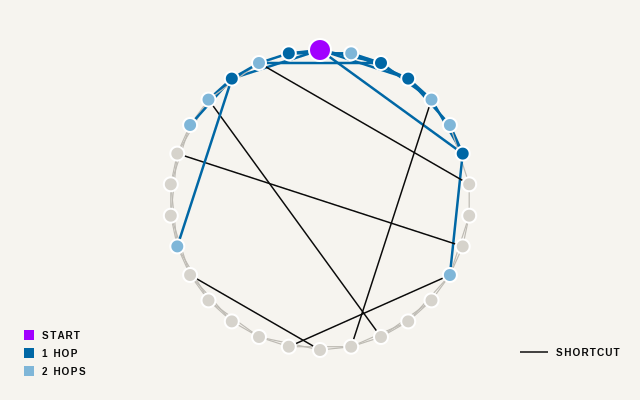
Hop depth

A hop is one relationship. More hops, more context. Node numbers show hop distance.

  • Proceed
  • Ask
  • Refuse
  • Escalate
  • No data
Use cases

One pattern, three demos.

Each demo asks a question and reads a graph; in two of them a gate then decides. The systems change; the pattern does not. The demos are deterministic, with no model calls; each Gemini Agent role shows where the agent fits in the blueprint.

Discover the estate before you migrate it

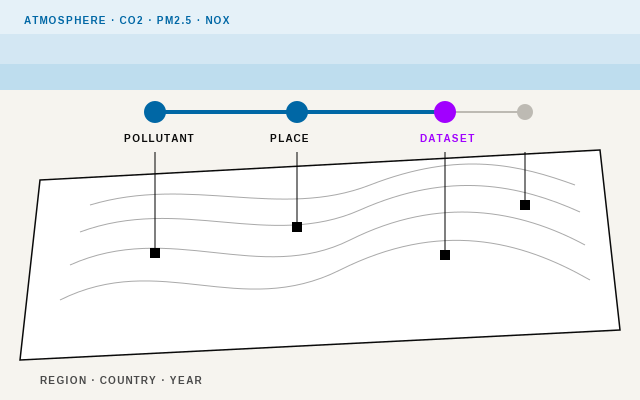
Environmental Agency catalogue discovery

  • SourceCatalogue records, documents and reference tables
  • What movesNothing yet: discovery comes first
  • DestinationChosen per dataset after discovery
Business question
Which datasets answer this air-quality request?
Gemini Agent role
In the blueprint: reads the request and summarises which datasets fit.
Gate
Answers only when a dataset fits; otherwise asks, refuses or reports no data.

The Environmental Agency and its catalogue are fictional.

Open the Environmental Agency demo
Change without breaking downstream

Lineage-guarded migration

  • SourceSAP table KNA1 and the jobs and reports that depend on it
  • What movesOne migration step, such as a column rename
  • DestinationBigQuery
Business question
Can this step run without breaking anything downstream?
Gemini Agent role
In the blueprint: proposes the step, its blast radius and its rollback.
Gate
Proceeds, asks, refuses or escalates at each step.
Open the lineage demo
Experiment · Small-world context

Little Bunnies: two hops reach most of what matters

  • SourceA small-world sample graph
  • What movesNothing: it measures context, not data
  • DestinationNot applicable
Business question
How much of the graph must an agent load to act safely? In a small-world sample, two hops hold most of it.
Gemini Agent role
In the blueprint: loads only the neighbourhood its task needs.
Context budget
Shows how much of the graph fits a fixed context budget.
Open Little Bunnies
Where to start

Start with one pattern. Scale on evidence.

  1. Assess

    What do we hold, and what depends on what?

    Connect the first systems through the MCP Tool Shed and map one domain's lineage. The estate stops being tribal knowledge.

  2. Plan

    Which path, in which order, with what rollback?

    Pick one pattern, such as SAP tables to BigQuery. Encode it as a skill with deterministic hooks. A person approves the plan.

  3. Deploy

    Did it arrive intact?

    Deterministic jobs move and validate the data. Jev gates each step, and a failed validation rolls back.

  4. Optimise

    What worked, and what did it cost?

    In the blueprint, eval records in BigQuery show what proceeded, what was escalated and the cost per object.

Governance

Built to show its working, and to say no.

The agent's design rules. The demos already show refusal, bounded outcomes, traceability and portability.

  • Least privilegeAgents get only the servers and scopes their task needs.
  • Refusal before tool callUnsafe requests stop before any server is called.
  • Approval before DeployA person approves the plan before anything moves.
  • Bounded outcomesProceed, ask, refuse, escalate or no data.
  • TraceableEvery outcome returns its lineage path and evidence.
  • MeasuredEvery step writes an eval record.
  • PortableThe same pages run on in-browser sample data or a live service on Cloud Run. Switching is configuration, not code.

The demos run fixed rules over a small in-memory graph, so every result is repeatable. They illustrate the pattern and are not a production tool.

Technical guide

How each layer works.

Runnable labs, graph-engine costs and every source behind the figures.

Open the technical guide